
Measuring guide
Measuring your cushion covers, made simple
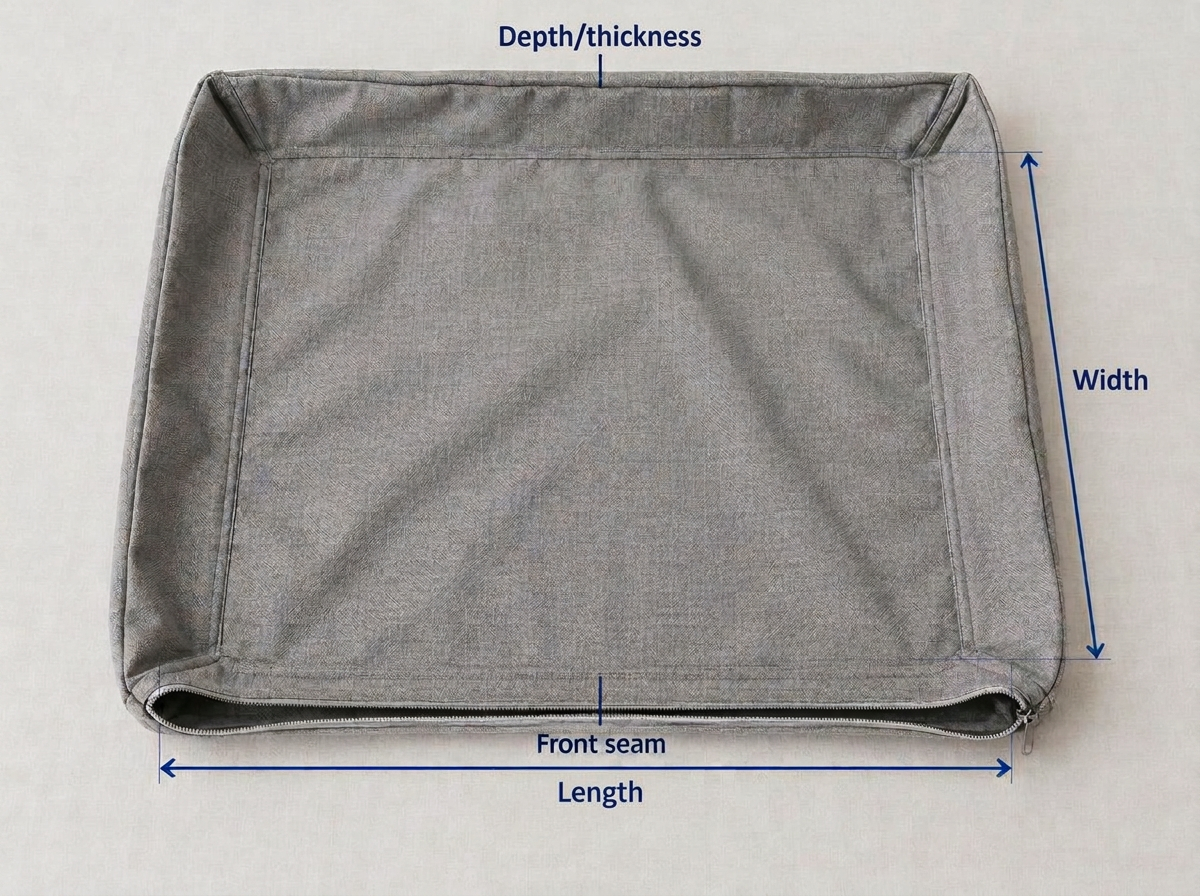
Five minutes with a tape measure is all it takes. The golden rule: measure the empty cover from stitched seam to stitched seam — never the old, flattened filling.
You'll need
- Tape measure (a soft sewing tape is ideal)
- Pen and paper or your phone
- A flat table or clear floor
- Step 1
Start with an empty cover
Take out the old foam or feathers and lay the cover flat on a table or floor. Smooth it with your hand, but don't stretch it — a stretched cover gives a measurement that's too big.
- Step 2
Length: along the front edge
Run your tape along the front of the cover, from the stitched seam on one side to the stitched seam on the other. Measure on the stitching line, not over the piping.
- Step 3
Width: front to back
Now measure from the front stitched seam straight back to the rear stitched seam. That's the seat's width, front to back.
- Step 4
Thickness: the side band
The upright strip of fabric around the edge is the boxing band. Measure it from its top seam down to its bottom seam — that height is the cushion's thickness (sometimes called depth). Leave out piping and loose seam allowances.
- Step 5
Pick your foam thickness and wrap
Your foam has to fill the band properly, not just copy a worn-out cushion. In our boxed seat example below, a 4″ band is filled with a 5″ foam core and Dacron is added on top of that. Shaped or very snug covers? Ask us to check before you order.
- Step 6
Write down every cushion
Give each cover a name — left, middle, right — and note its length, width, band thickness, foam thickness and wrap, all in the same units. Cushions that look the same often aren't, so measure each one and note any curves, tapers or T-shaped corners.
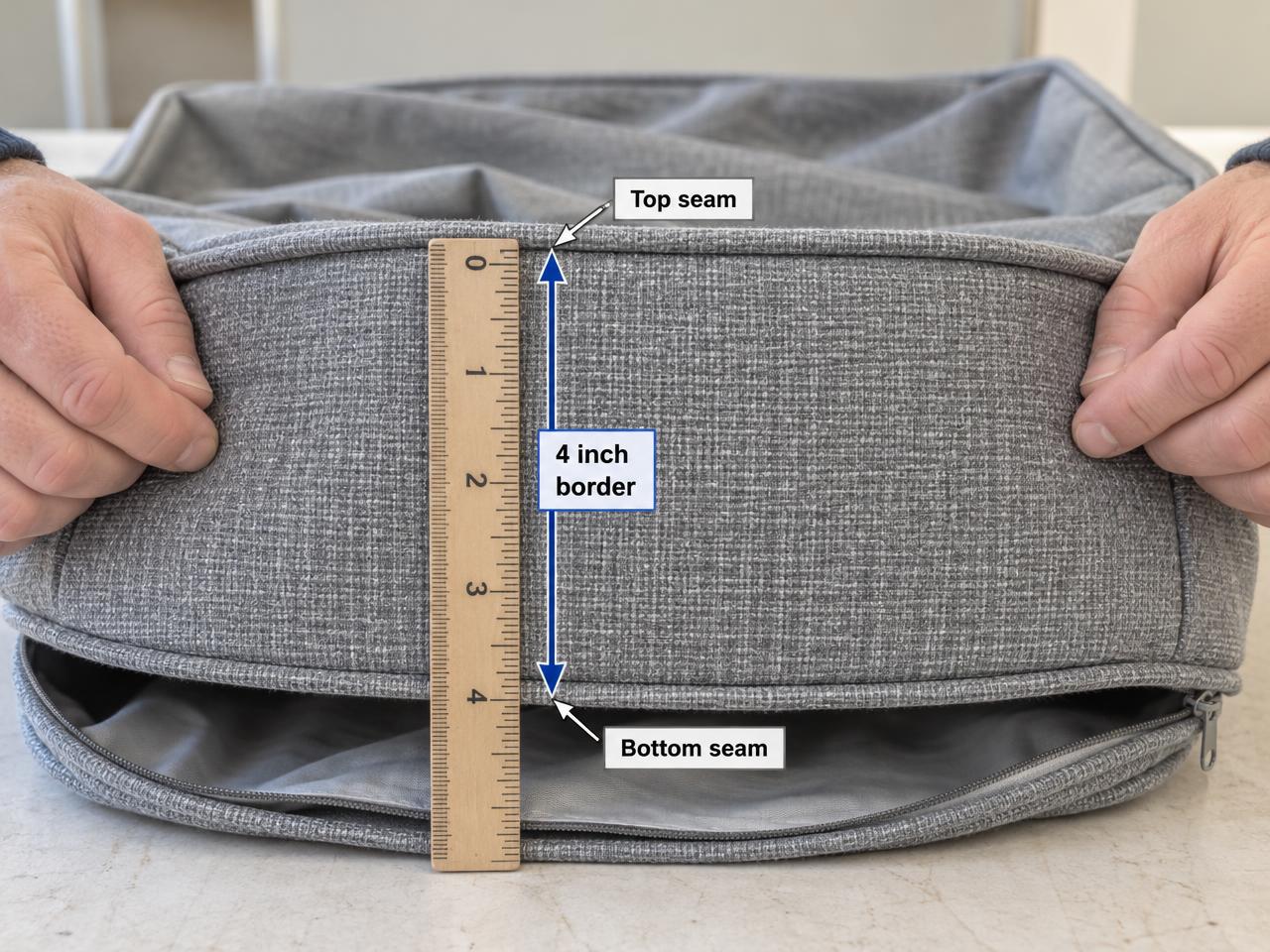
Worked example: 4″ band, 5″ foam
Why we often suggest a little extra foam for a boxed seat cushion.
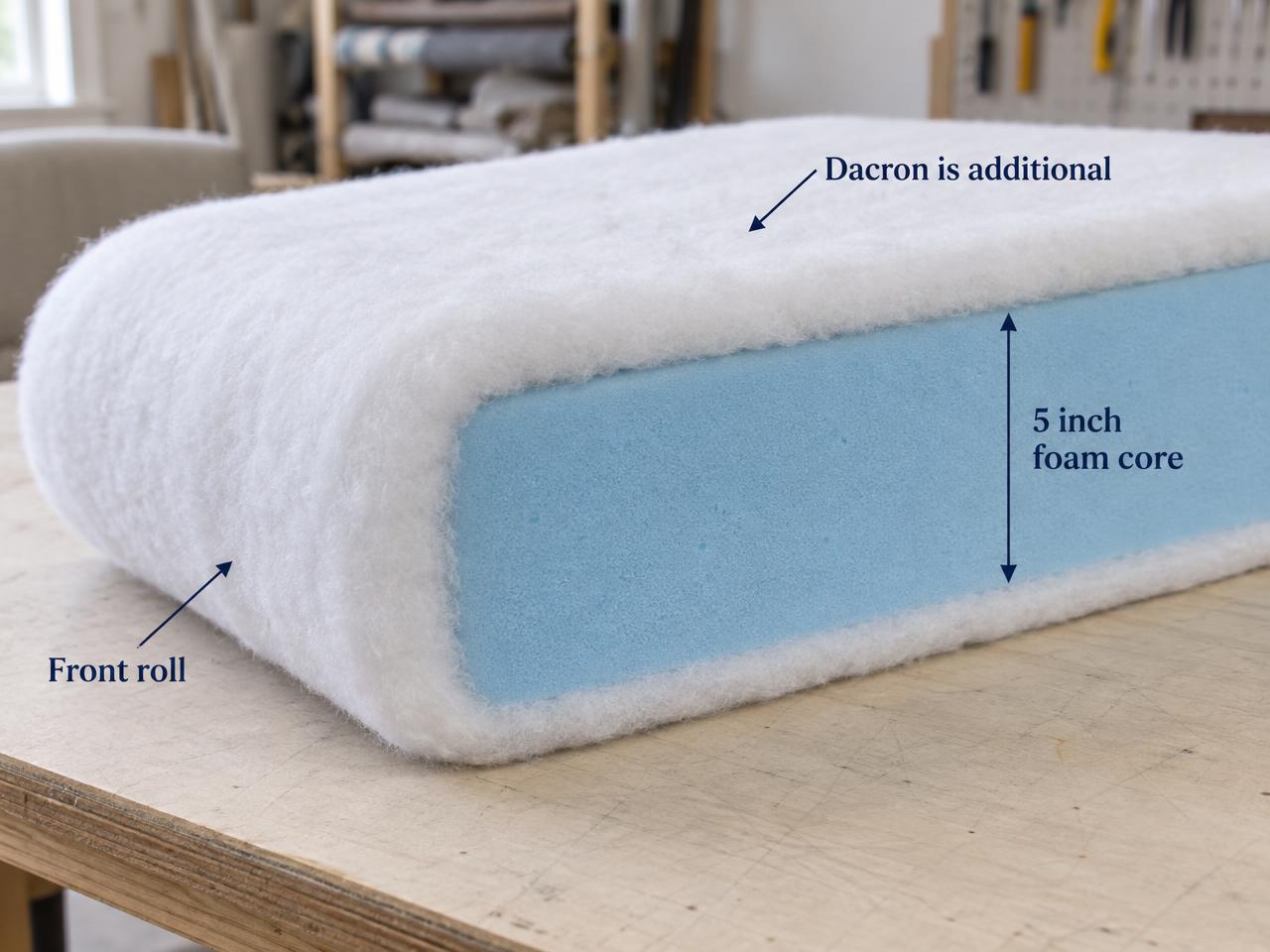
4″
Cover band
5″
Foam core
Full
Dacron wrap
The extra inch of foam fills the band so the seat sits plump. Dacron then goes around the outside — top, bottom and front roll — to soften the edges, take up small creases and stop the foam rubbing on the fabric.
Dacron is extra, not a substitute. A 4″ core in this 4″ band will still look flat and wrinkled, Dacron or not. This is one boxed-seat example, not a rule for every shape.
Same cover, two results
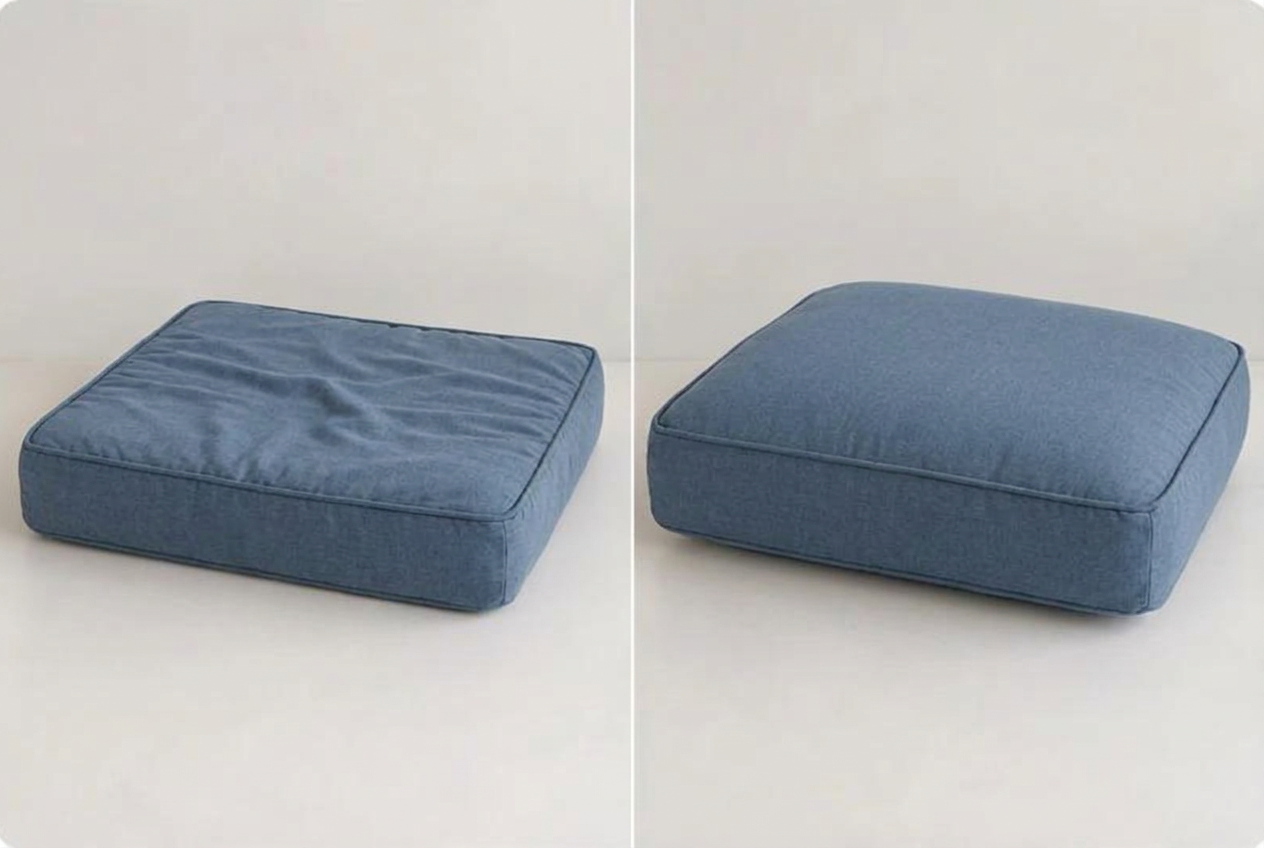
4″ foam + Dacron: sits flat, fabric wrinkles.
5″ foam + Dacron: full seat, softly rounded edges.
Illustrative photos of our 4″ boxed seat example — not universal sizing advice.
Pick your cushion shape to price straight away
Have your empty-cover seam measurements ready? Jump straight to the matching shape in our 3D calculator.
Why measuring the old foam leads to loose covers
Worn foam compresses permanently and loses height and corner fullness, while feather and fibre pads collapse into the centre of the cover. Copying those shrunken measurements produces a new insert that still looks under-filled.
Measuring the empty zipped cover from stitched seam to stitched seam captures the true volume your cover was tailored to hold. Our workshop then precision cuts each cushion to your measurements.
Checking tricky shapes before you order
Many UK sofas use T-shaped or L-shaped outer cushions that wrap around the armrests, or curved fronts on bay and chaise seats. Measure every cushion separately rather than assuming left and right match.
- Boxed rectangle seats: enter length (front edge), width (front to back) and depth (side boxing band) in cm, mm or inches.
- T-shape and L-shape arm cushions: measure the widest front edge, rear narrower edge, front-to-back depth and ear cut-outs.
- Awkward curves or tight designer covers: upload a photo or dimensioned sketch in the calculator, or use our UK Collection Service so our upholsterers measure the empty covers for you.
Common questions
Should I measure inside or outside the piping on a cushion cover?
Measure along the stitched seam line itself, ignoring the raised piping cord and any loose fabric seam allowance inside the cover.
Do I always add 1 inch to the thickness of every sofa cushion?
No. Adding an extra inch works well on our 4-inch boxed seat example (4-inch band filled with a 5-inch core plus Dacron), because boxed seats benefit from gentle crown tension. Very tight covers, slim dining pads or shaped cushions do not follow a single rule — contact us if you want our team to check.
What if I would rather not measure my sofa cushions myself?
You can book our UK Collection Service: pack your empty cushion covers, we collect them, measure them in our Newcastle workshop and send a quote. If you choose not to go ahead, up to £25 may be deducted to cover collection delivery fees.